
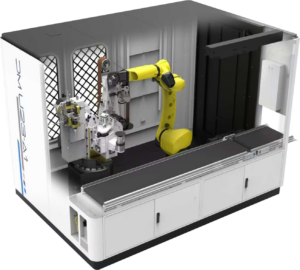
DM – U23 – A2
Automatic deburring cell for die casting parts
The ΔX deburring islands represent an advanced solution for automating finishing processes on die-cast aluminum components. The system is designed to replace manual operations, ensuring consistent quality, repeatability, and increased productivity.
Thanks to an approach similar to a machining center, ΔX cells enable all deburring operations to be carried out automatically, even on complex components and variable production batches.
Maximum integration and high flexibility
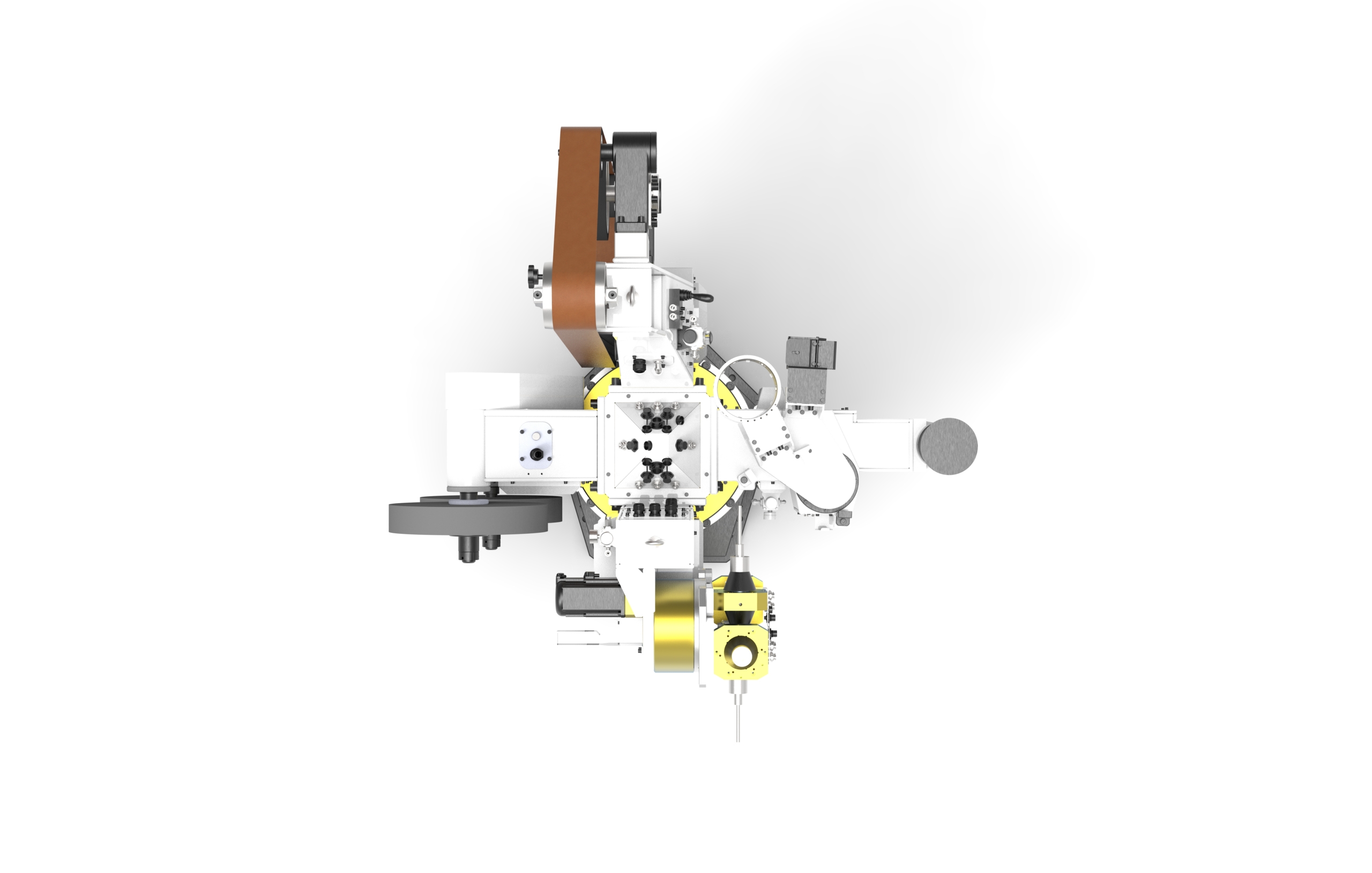
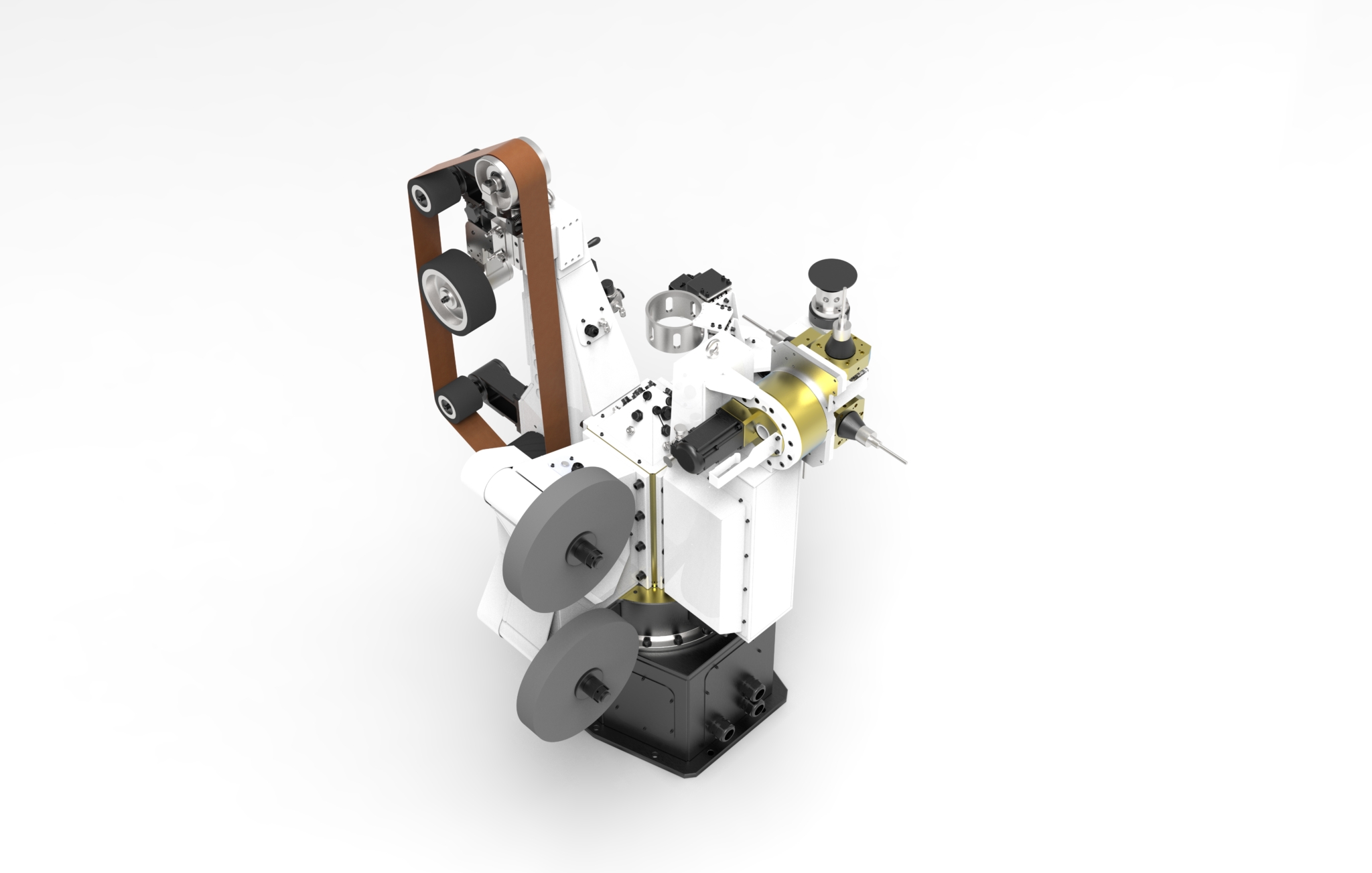
The working unit of the DM-U23-A2 model consists of a rotary base with 4 modular stations, each configurable according to the specific finishing operations required.
The modular design ensures a high degree of process flexibility, allowing different processing technologies to be integrated within the same unit.
In the standard configuration, the machining unit consists of:
-
Belt sanding unit
for material removal and surface finishing operations on flat geometries or edges -
Polishing unit
for aesthetic finishing and improvement of the surface quality of the workpiece -
Tool storage module
for automated tool management and reduced changeover times -
Vibratory disc polishing system
for uniform finishing of complex surfaces and workpieces with irregular geometries
The main features of the DM-U23-A2 cell are: DM-U23-A2 sono:
- Modular and configurable structure
- Integration of multiple processes within a single rotary unit
- High repeatability of the machining cycle
- Reduced cycle times and manual operations
- Adaptability to different types of parts, finishing requirements and materials
Robotic system and workpiece cycle management
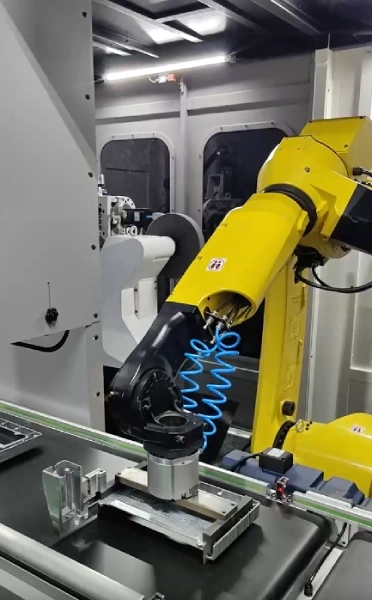
The robot is the central element of the cell and manages the entire workpiece handling cycle in a fully automatic manner.
The robot picks up the raw workpiece from the loading conveyor, positions it in the machining units, performs any required reorientation for multi-side operations, and unloads the finished part onto the output conveyor.
On the robot wrist a quick-change gripping unitis installed, enabling the use of different gripping tools depending on the required operation.
The gripping units are stored in a dedicated magazine integrated into the cell.
The part recognition is performed via a 3D laser vision system, which detects the position and orientation of the part on the loading belt and transmits the data to the robot for correct handling.
Feasibility study and process validation
Each solution is developed starting from a technical feasibility studybased on the workpiece characteristics and the customer’s production specifications.
When required, the process is validated through machining trials on real components,with the aim of simulating the full operating cycle and verifying in advance the deburring and finishing results.
This approach enables optimization of the system configuration, reduction of application risks, and ensures maximum solution reliability prior to production start-up.

 English
  Italiano